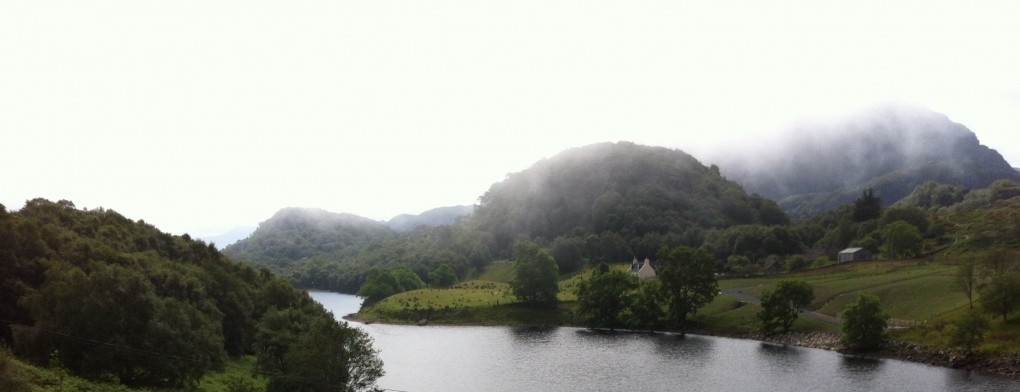
THE VIEW FROM BEN WYVIS
From this snow clad mountain near the fast growing city of Inverness, you can see what makes highlanders love their country – and nearly everything that vexes them. Wind farms, deer forests, good forests, bad forests, the great pylons of new power lines, grouse moors, hydro schemes on those famous salmon rivers the Beauly, Glass and Conon, the industrial estate and distillery at the Muir of Ord, the barley fields of the Black Isle and the oil rigs, service docks and power plant rearing from the Firth of Cromarty. If you were 50 miles to the west you could see the fish farms as well. But the wild beauty and even the ptarmigan on these high hills are still there and luckily you can’t see any politicians.
The disputes about these visible things, and the big dispute about independence coming to a head later this year, are all about the ownership and use of land and sea – the balance between private, public, regional, national and romantic rights over them – and nothing is more political than that. This journal plans to explore these issues and the lives, arts and sports of modern highlanders. To many of them the arguments about Scottish independence apply equally to the highlands. Who wants to be told what to do with their land by a bunch of city slickers from a distant southern capital? Why should we share our oil with all those lowlanders? Why should we let them cover our hills with wind farms and our sea lochs with fish farms just to satisfy southern greens and business interests? And what’s all this nonsense about keeping the pound when we could easily use the whisky standard?
I lean to a system where policy is made at the appropriate level. This would mean decisions on wind and fish farms and other policy choices for the highlands should be made in the highlands, where nobody would be fooled that they have no effect on tourism and wildlife. Foreign and general economic policy should obviously be made at the national level – whichever nation that might prove to be – and whichever it is will be equally constrained by the demands of the global economy. My view is that one is enough, unless Scots think they cannot thrive in the UK, which the names of recent British prime ministers tends to disprove, along the with hundreds of thousands of scientists, soldiers and sailors, philosophers, doctors, writers, artists, comedians, actors and businessmen who have made their names and their fortunes in the union. And without which they may have been as well known as all those Norwegian greats.
But this journal will hopefully have contributors from all sides on this debate and any other effecting the highlands, and much that is not political at all. Contributors and ideas for articles are being sought. We will need foreign correspondents in Glasgow and Edinburgh, writers on any art, any sport, anything at all practised in the highlands. Except perhaps the more bizarre sexual practices. We also want cartoons and photographs. At the moment we can only pay modest amounts for exceptional work. This may change when we start getting some subscription or advertising revenue. Please get in touch.
Andrew Buckoke, Editor
Editorial Board
Andrew Buckoke (abuckoke@aol.com)
Joe Gibbs
Jane Laing
 Highland